

Annapurna Base Camp (ABC) Trek Difficulty – Complete Guide
The Annapurna Base Camp Trek is one of the most iconic trekking routes in Nepal. It offers spectacular Himalayan scenery, rich cultural experiences, and a variety of landscapes, from subtropical forests to alpine zones. While it is not a technical climb, the trek has challenges that make it moderate to moderately difficult depending on your preparation, fitness, and weather conditions.
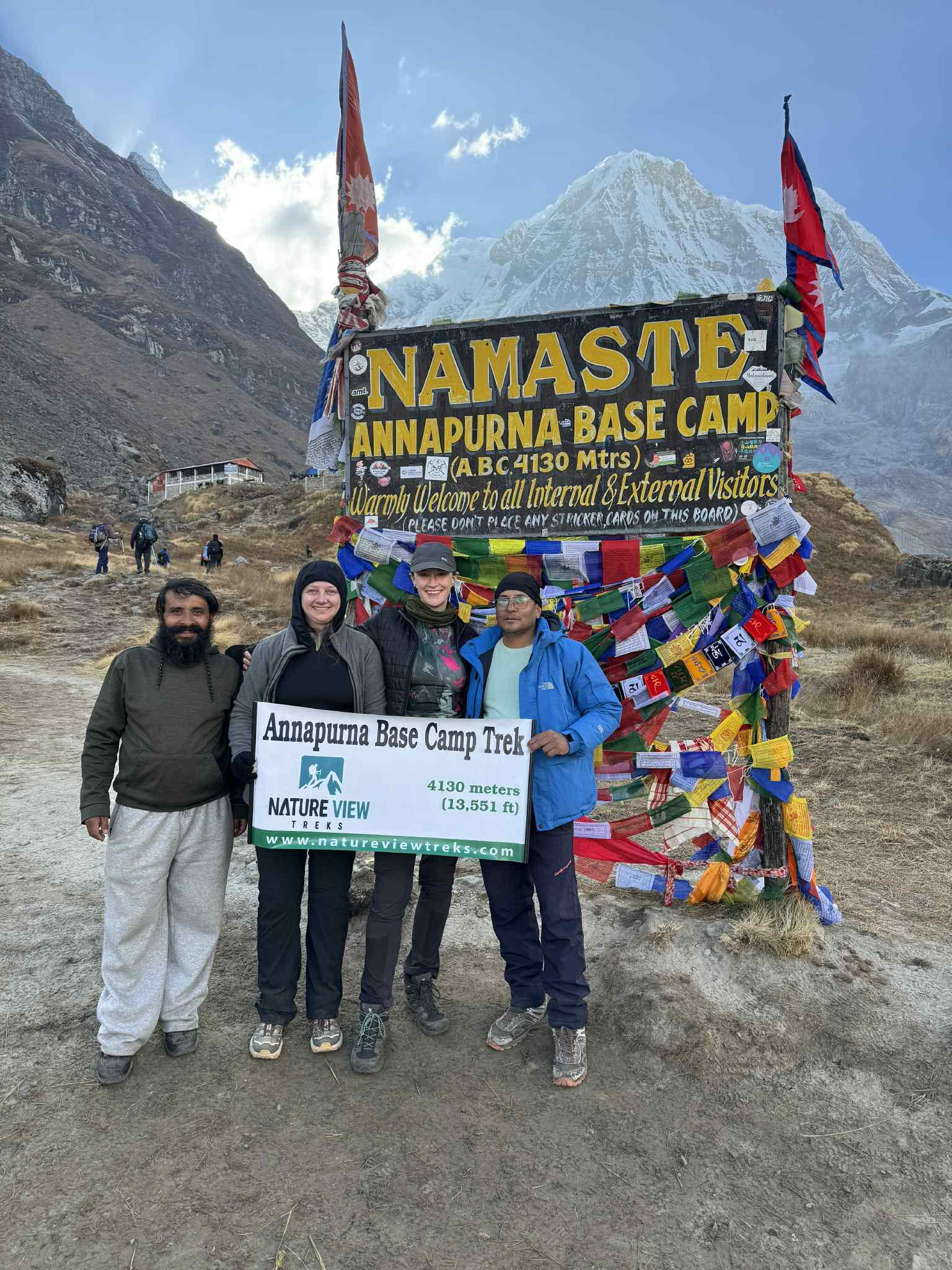
Overview of the Trek
-
Starting Point: Nayapul or Pokhara
-
Ending Point: Annapurna Base Camp (ABC) – 4,130 meters (13,550 ft)
-
Total Duration: 7–12 days (round trip)
-
Maximum Altitude: 4,130 meters
-
Distance: 115–130 km round trip
-
Trek Type: Out-and-back, with the option for circular routes
The trek passes through traditional Gurung and Magar villages, lush forests, terraced farmland, and high mountain landscapes, culminating at the Annapurna Sanctuary—a natural amphitheater surrounded by towering peaks.
Factors Affecting Trek Difficulty
The difficulty of the ABC trek is influenced by multiple factors, including altitude, terrain, daily walking distance, and weather conditions.
Altitude Challenges
-
The trek reaches 4,130 meters, considered high altitude.
-
At this elevation, Acute Mountain Sickness (AMS) can occur, causing headaches, nausea, fatigue, or dizziness.
-
Gradual ascent and rest days are crucial to reduce the risk of altitude sickness.
-
Recommended acclimatization points: Ghorepani, Chhomrong, or Deurali.
Terrain and Trail Conditions
-
The trail is well-marked but rugged:
-
Stone steps and rocky paths
-
Muddy or slippery sections during monsoon
-
Narrow trails alongside rivers and cliffs
-
-
Steep ascents and descents are frequent, especially in:
-
Chhomrong → Dovan → Deurali → ABC
-
Sections with 800–1,000 meters of vertical gain in a single day
-
Daily Walking Duration
-
Average trekking time: 5–8 hours per day
-
Early starts are recommended to avoid afternoon weather changes
-
Some sections are longer or steeper, demanding moderate to good physical fitness
Weather Conditions
-
Best Season: Spring (March–May) and Autumn (September–November)
-
Summer (Monsoon): Trails slippery; risk of landslides
-
Winter: Cold temperatures and snow at higher elevations
-
Sudden weather changes can increase difficulty, particularly above 3,000 meters
Trek Difficulty Classification
| Aspect | Difficulty Level | Explanation |
|---|---|---|
| Physical Difficulty | Moderate | Long walking hours, steep ascents/descents, endurance needed |
| Altitude Difficulty | Moderate to High | Maximum elevation 4,130 m; risk of AMS |
| Technical Difficulty | Low | No technical climbing; well-marked trail |
| Accessibility | Moderate | Tea houses available; limited medical facilities at higher altitudes |
| Suitability | Beginner to Intermediate | Beginners can trek with good fitness, proper guidance, and acclimatization |
Physical Fitness Requirements
To complete the ABC trek comfortably:
-
Cardiovascular fitness: Long walking days require stamina
-
Leg strength: Uphill and downhill sections are physically demanding
-
Endurance: Consecutive trekking days can be challenging for beginners
Tips for Preparation:
-
Practice long hikes with a backpack
-
Stair climbing or hill walking for leg strength
-
Regular cardiovascular exercises: jogging, cycling, swimming
Key Challenges on the Trek
-
Steep Ascents/Descents – Some sections can be exhausting, especially after consecutive days of walking.
-
Altitude Sickness – Symptoms can occur above 3,000 m. Proper acclimatization and hydration are essential.
-
Slippery or Narrow Trails – Especially during monsoon or snowy winter.
-
Weather Changes – Rain, snow, or cold temperatures at higher elevations.
-
Limited Medical Facilities – Only small health posts in villages; advanced care is only in Pokhara or Kathmandu.
Trekking Tips to Handle Difficulty
-
Acclimatize Properly: Avoid rushing; take rest days.
-
Walk at Your Own Pace: Don’t try to match others; conserve energy.
-
Pack Light: Reduce strain on your legs and back.
-
Stay Hydrated and Eat Well: Helps combat fatigue and altitude issues.
-
Use Trekking Poles: Reduces stress on knees during descents.
-
Hire a Guide or Porter (Optional): Makes trek easier for beginners.

Day-by-Day Difficulty Snapshot (Typical Itinerary)
| Day | Altitude (m) | Distance (km) | Duration (hrs) | Difficulty |
|---|---|---|---|---|
| Nayapul → ullery | 2050 | 11 | 5 | Moderate |
| Ullery → Ghorepani | 2,850 | 8 | 5-6 | Moderate |
| Ghorepani → Tadapani | 2,630 | 10 | 6-7 | Moderate |
| Tadapani → Chhomrong | 2,170 | 12 | 6-7 | Moderate |
| Chhomrong → Dovan | 2,600 | 8 | 5–6 | Moderate |
| Dovan → Deurali | 3,230 | 10 | 4-5 | Moderate–High |
| Deurali → ABC | 4,130 | 7 | 5–6 | High |
| ABC → Bamboo (Return) | 2,310 | 14 | 6–7 | Moderate |
| Bamboo → Nayapul | 1,070 | 15 | 6–7 | Easy |
Note: The difficulty increases with altitude and steep climbs, especially between Deurali and ABC.
Summary
The Annapurna Base Camp Trek is:
-
Physically demanding: Due to steep paths and long walking days
-
Moderate in technical difficulty: No climbing or mountaineering skills required
-
Altitude-challenging: Proper acclimatization is crucial
-
Accessible: Tea houses along the route provide shelter and meals
With adequate fitness, preparation, and careful planning, most trekkers can complete the ABC trek safely and enjoy the stunning Himalayan scenery.
